
DeskZen is reader-supported. If you buy through links on this page, we may earn an affiliate commission at no extra cost to you. We only link to products we consider genuinely relevant for home office and hybrid work setups.
Premium Chair Comparison 2026
Steelcase Gesture vs Herman Miller Aeron: Which Premium Office Chair Should You Buy?
Two of the best-known ergonomic chairs take very different approaches to long-workday comfort. The Gesture is adaptive and cushioned. The Aeron is breathable, firm, and iconic. The better choice depends on how you sit, how warm your workspace gets, and how much adjustability you need.


DeskZen Verdict
Choose the Steelcase Gesture if you want adaptive arms, a cushioned seat, and a chair that handles laptops, tablets, phones, and changing postures well. Choose the Herman Miller Aeron if you prefer breathable mesh, firm ergonomic support, multiple size options, and a more iconic long-term design.
We do not list fixed Amazon prices because prices and availability change frequently.
Is the Steelcase Gesture better than the Herman Miller Aeron?
The Steelcase Gesture is usually better if you want adaptive arms, a cushioned seat, and support for varied working postures. The Herman Miller Aeron is usually better if you prefer breathable mesh, firmer posture support, and a chair available in multiple sizes. For most multi-device home office users, the Gesture is the safer comfort pick; for hot environments and mesh-chair fans, the Aeron remains the benchmark.
The duel at a glance

Steelcase Gesture
Best for adaptive comfort and multi-device work.
- 360° adjustable arms that follow laptop, tablet, and phone postures
- Cushioned, contoured seat built for long workdays
- Backrest that moves with you through posture changes
- 12-year warranty
Herman Miller Aeron
Best for breathable mesh, firm support, and iconic durability.
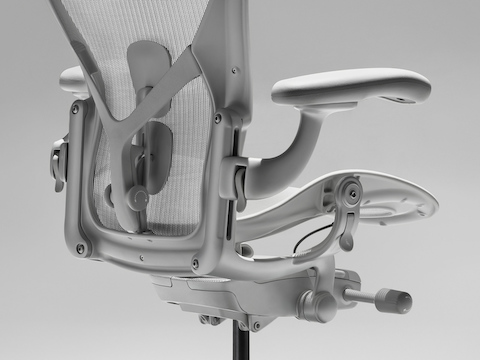
- Pellicle mesh seat and back that stay cool all day
- Firm, zoned posture support (PostureFit SL)
- Three sizes (A, B, C) for a tailored body fit
- 12-year warranty and a proven long-term track record
Gesture vs Aeron: quick comparison
| Criterion | Steelcase Gesture | Herman Miller Aeron | Better choice |
|---|---|---|---|
| Seat feel | Cushioned, contoured foam | Firm, suspended mesh | Preference |
| Back support | Adaptive, moves with your spine | Firm, zoned (PostureFit SL) | Preference |
| Armrests | 360° adjustable, class-leading | Adjustable but less versatile | Gesture |
| Recline | Smooth, posture-following | Famously balanced and fluid | Aeron |
| Breathability | Fabric over foam, runs warmer | Full mesh, stays cool | Aeron |
| Sizing | One size, broad adjustment range | Three sizes (A / B / C) | Aeron |
| Best for tall users | Good with adjustments | Size C fits taller frames well | Aeron |
| Best for hot rooms | Adequate | Benchmark-level airflow | Aeron |
| Best for multi-device work | Designed exactly for this | Not its focus | Gesture |
| Visual design | Modern, understated | Iconic, instantly recognizable | Preference |
| Long-term value | 12-year warranty, durable build | 12-year warranty, strong resale reputation | Aeron |
| Main drawback | Runs warmer; headrest costs extra | Firm feel and mesh seat edges aren’t for everyone | — |
What the Steelcase Gesture does better
The Gesture was designed around a simple observation: people no longer sit one way. They type, lean back with a tablet, hold a phone, slouch, perch. Its 360° arms are the clearest expression of that — they pivot, raise, and track inward or outward to support your forearms in positions most chairs ignore. The cushioned, contoured seat stays comfortable through long uninterrupted sessions, and the backrest follows your spine as you shift rather than holding one fixed shape. If your workday moves between a laptop, a second screen, and a phone, this is the chair built for that reality.

Where the Steelcase Gesture is weaker
The fabric-over-foam construction runs warmer than mesh — noticeable in poorly ventilated rooms or hot summers. The headrest is an extra-cost option rather than standard. And while the adjustment range is broad, the Gesture comes in one size: it fits most bodies well, but it can’t offer the tailored fit of a chair built in multiple frame sizes.
Buy the Gesture if
- You switch constantly between keyboard, tablet, and phone
- You prefer a cushioned seat over suspended mesh
- You change postures often during long workdays
- You want class-leading armrest adjustability
Skip it if
- Your workspace runs hot and breathability is your priority
- You want a firm, suspended seating feel
- You need a headrest included by default
What the Herman Miller Aeron does better
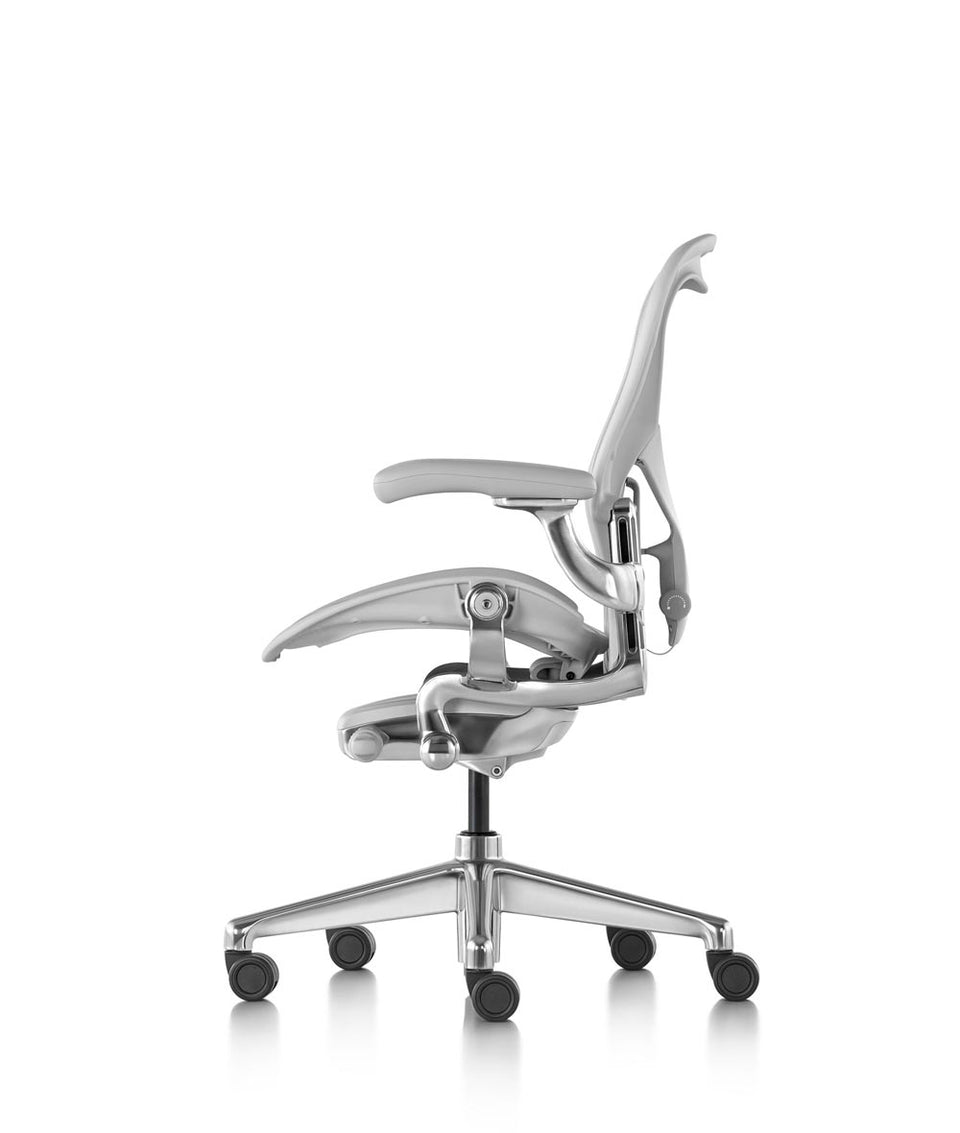
The Aeron’s Pellicle mesh is still the reference for breathability: air moves through the seat and back all day, and the suspended surface distributes weight without foam that compresses over the years. Support is firm and deliberate — the PostureFit SL pads stabilize the base of the spine, and the recline remains one of the most balanced in the industry. Three frame sizes (A, B, C) mean smaller and taller users get a real fit rather than a compromise. Add a design that has barely needed to change since it became an icon, and you get the premium chair with the strongest long-term reputation.
Where the Herman Miller Aeron is weaker
Firmness is a feature and a filter: users who want plush, cushioned comfort often find the Aeron unforgiving at first. The mesh seat edge can press against the thighs in some sitting positions, there’s no meaningful seat-depth adjustment — you choose your depth by choosing your size — and Herman Miller offers no official headrest. Multi-device postures aren’t its focus either: the arms adjust, but not with the Gesture’s range.
Buy the Aeron if
- Your workspace runs warm or you tend to overheat while sitting
- You prefer firm, structured support over cushioning
- You’re notably smaller or taller than average — sizes A and C exist for you
- Long-term durability and iconic design matter to you
Skip it if
- You want a soft, padded seat
- Mesh seat edges bother you in varied sitting positions
- You need a headrest for reclined work
Seat feel: cushioned foam vs suspended mesh
Steelcase Gesture
Contoured foam with a flexible seat edge. Feels welcoming immediately, stays comfortable through long sessions, runs warmer over hours.
Herman Miller Aeron
Suspended Pellicle mesh. Firm and springy, distributes pressure without foam, feels cold-start unusual if you’ve only known padded chairs.
Verdict: genuine preference split. Padded-seat users adapt to the Gesture instantly; the Aeron rewards those who want firmness — and divides those who don’t.
Armrests: the Gesture’s home turf
Steelcase Gesture
360° arms that move like limbs: height, depth, width, and pivot. They support tablet reading, phone use, and off-keyboard postures other chairs don’t handle.
Herman Miller Aeron
Fully adjustable arms (height, angle, depth on higher trims) that work well for standard desk postures, without matching the Gesture’s range.
Verdict: Gesture — this is the single clearest functional gap between the two chairs, and the main reason multi-device workers lean Steelcase.
Back support: adaptive vs zoned
Steelcase Gesture
The backrest flexes with your spine as you move, keeping contact through posture changes rather than enforcing one position.
Herman Miller Aeron
PostureFit SL stabilizes the pelvis and lower spine with adjustable firmness — structured, deliberate, consistent.
Verdict: preference again — dynamic support (Gesture) vs structured support (Aeron). Both approaches can support good sitting posture; neither is a treatment for back pain, and fit matters more than brand reputation.
Breathability: no contest
Steelcase Gesture
Fabric over foam. Perfectly adequate in temperate rooms, noticeably warm in hot ones or during long summer sessions.
Herman Miller Aeron
Mesh seat and back with continuous airflow. The chair people specifically buy for hot offices, and still the benchmark.
Verdict: Aeron, decisively. If your workspace runs hot, this criterion alone can settle the duel.
Sizing and body fit: one size vs three
Steelcase Gesture
One frame with a wide adjustment range — including seat depth — that covers most body types well. The extremes of the height spectrum are where it compromises.
Herman Miller Aeron
Sizes A, B, and C, each proportioned for a body range. No seat-depth adjustment — the size choice is the fit. Getting the size right is essential; getting it wrong undoes the chair’s advantages.
Verdict: Aeron for users outside the average range — a size built for your body beats adjustments layered on a single frame. For average builds, the Gesture’s seat-depth adjustment closes most of the gap.
What the Steelcase Gesture does better
The Gesture was designed around a simple observation: people no longer sit one way. They type, lean back with a tablet, hold a phone, slouch, perch. Its 360° arms are the clearest expression of that — they pivot, raise, and track inward or outward to support your forearms in positions most chairs ignore. The cushioned, contoured seat stays comfortable through long uninterrupted sessions, and the backrest follows your spine as you shift rather than holding one fixed shape. If your workday moves between a laptop, a second screen, and a phone, this is the chair built for that reality.
Where the Steelcase Gesture is weaker
The fabric-over-foam construction runs warmer than mesh — noticeable in poorly ventilated rooms or hot summers. The headrest is an extra-cost option rather than standard. And while the adjustment range is broad, the Gesture comes in one size: it fits most bodies well, but it can’t offer the tailored fit of a chair built in multiple frame sizes.
Buy the Gesture if
- You switch constantly between keyboard, tablet, and phone
- You prefer a cushioned seat over suspended mesh
- You change postures often during long workdays
- You want class-leading armrest adjustability
Skip it if
- Your workspace runs hot and breathability is your priority
- You want a firm, suspended seating feel
- You need a headrest included by default
What the Herman Miller Aeron does better
The Aeron’s Pellicle mesh is still the reference for breathability: air moves through the seat and back all day, and the suspended surface distributes weight without foam that compresses over the years. Support is firm and deliberate — the PostureFit SL pads stabilize the base of the spine, and the recline remains one of the most balanced in the industry. Three frame sizes (A, B, C) mean smaller and taller users get a real fit rather than a compromise. Add a design that has barely needed to change since it became an icon, and you get the premium chair with the strongest long-term reputation.
Where the Herman Miller Aeron is weaker
Firmness is a feature and a filter: users who want plush, cushioned comfort often find the Aeron unforgiving at first. The mesh seat edge can press against the thighs in some sitting positions, there’s no meaningful seat-depth adjustment — you choose your depth by choosing your size — and Herman Miller offers no official headrest. Multi-device postures aren’t its focus either: the arms adjust, but not with the Gesture’s range.
Buy the Aeron if
- Your workspace runs warm or you tend to overheat while sitting
- You prefer firm, structured support over cushioning
- You’re notably smaller or taller than average — sizes A and C exist for you
- Long-term durability and iconic design matter to you
Skip it if
- You want a soft, padded seat
- Mesh seat edges bother you in varied sitting positions
- You need a headrest for reclined work
Seat feel: cushioned foam vs suspended mesh
Steelcase Gesture
Contoured foam with a flexible seat edge. Feels welcoming immediately, stays comfortable through long sessions, runs warmer over hours.
Herman Miller Aeron
Suspended Pellicle mesh. Firm and springy, distributes pressure without foam, feels cold-start unusual if you’ve only known padded chairs.
Verdict: genuine preference split. Padded-seat users adapt to the Gesture instantly; the Aeron rewards those who want firmness — and divides those who don’t.
Armrests: the Gesture’s home turf
Steelcase Gesture
360° arms that move like limbs: height, depth, width, and pivot. They support tablet reading, phone use, and off-keyboard postures other chairs don’t handle.
Herman Miller Aeron
Fully adjustable arms (height, angle, depth on higher trims) that work well for standard desk postures, without matching the Gesture’s range.
Verdict: Gesture — this is the single clearest functional gap between the two chairs, and the main reason multi-device workers lean Steelcase.
Back support: adaptive vs zoned
Steelcase Gesture
The backrest flexes with your spine as you move, keeping contact through posture changes rather than enforcing one position.
Herman Miller Aeron
PostureFit SL stabilizes the pelvis and lower spine with adjustable firmness — structured, deliberate, consistent.
Verdict: preference again — dynamic support (Gesture) vs structured support (Aeron). Both approaches can support good sitting posture; neither is a treatment for back pain, and fit matters more than brand reputation.
Breathability: no contest
Steelcase Gesture
Fabric over foam. Perfectly adequate in temperate rooms, noticeably warm in hot ones or during long summer sessions.
Herman Miller Aeron
Mesh seat and back with continuous airflow. The chair people specifically buy for hot offices, and still the benchmark.
Verdict: Aeron, decisively. If your workspace runs hot, this criterion alone can settle the duel.
Sizing and body fit: one size vs three
Steelcase Gesture
One frame with a wide adjustment range — including seat depth — that covers most body types well. The extremes of the height spectrum are where it compromises.
Herman Miller Aeron
Sizes A, B, and C, each proportioned for a body range. No seat-depth adjustment — the size choice is the fit. Getting the size right is essential; getting it wrong undoes the chair’s advantages.
Verdict: Aeron for users outside the average range — a size built for your body beats adjustments layered on a single frame. For average builds, the Gesture’s seat-depth adjustment closes most of the gap.
Is the Hbada X7 a real alternative?

Best lower-cost executive-style alternative.
Let’s be direct: the Hbada X7 is not a true replacement for the Steelcase Gesture or Herman Miller Aeron. The build quality, warranty coverage, and refinement of the two premium chairs play in a different league. But it answers a question the duel doesn’t: what if the premium price simply isn’t realistic? The X7 offers an executive-style design, a headrest as standard — something neither premium chair includes — and modern ergonomic features at a fraction of the cost. It can make sense if you want an affordable ergonomic chair with a contemporary look, or as a first serious chair before committing to premium.
So which one should you choose?
Choose the Steelcase Gesture if
Your workday spans keyboard, tablet, and phone; you want a cushioned seat and arms that follow every posture. The safest comfort pick for most multi-device home offices.
Choose the Herman Miller Aeron if
Your workspace runs warm, you prefer firm structured support, or you’re outside the average body range — sizes A and C exist precisely for you. Read our full Aeron review for the deep dive.
Consider the Hbada X7 if
The premium budget isn’t realistic right now and you want a modern executive-style chair with a headrest included — accepted as a value pick, not a premium equal.
Best chair by user profile
Multi-device work
Steelcase Gesture 360° arms built for laptop, tablet, and phone postures.
Hot workspaces
Herman Miller Aeron Full mesh airflow — the benchmark for warm rooms.
Cushioned seat preference
Steelcase Gesture Contoured foam that welcomes you instead of suspending you.
Firm mesh preference
Herman Miller Aeron Suspended Pellicle mesh with zoned PostureFit SL support.
Smaller or taller builds
Herman Miller Aeron Sizes A, B, and C — a frame proportioned for your body.
Lower-cost alternative
Hbada X7 Executive style and a standard headrest at an accessible price.
Best long-term premium choice? It depends on fit: Gesture for adaptive comfort, Aeron for breathable durability. Both carry 12-year warranties — the deciding factor is your body and your room, not the badge.
Final recommendation
There is no universal winner in this duel — and that’s the honest conclusion, not a cop-out. The Steelcase Gesture wins for adaptive comfort: cushioned seating, unmatched armrests, and a design built for how people actually work across devices in 2026. The Herman Miller Aeron wins for breathable, firm, tailored support and a track record no other office chair matches. If you’re still torn after everything above, default to this: warm room or non-average build → Aeron; everything else → Gesture.
A premium ergonomic chair can support better sitting posture and reduce common comfort issues for some users, but it cannot guarantee pain prevention or replace medical advice. Whichever you choose, fit matters more than brand reputation.
Exploring more options? See our guide to the best premium ergonomic office chairs or our Sihoo Doro S300 review for another mid-priced contender.
How we compared these chairs
We evaluated these chairs based on buyer-relevant criteria: seat feel, back support, armrest adjustability, recline behavior, breathability, sizing, build quality, warranty context, long-workday comfort, workspace fit, and value for different types of users. We do not use fixed Amazon prices because prices and availability change frequently.
Our assessments draw on manufacturer specifications, documented product characteristics, and aggregated long-term user feedback — not on claims we can’t verify. Where a criterion comes down to personal preference rather than measurable difference, we say so instead of forcing a winner.
Gesture vs Aeron: frequently asked questions
Is the Steelcase Gesture better than the Herman Miller Aeron?
Neither is universally better. The Gesture is usually the stronger pick for adaptive arms, a cushioned seat, and multi-device postures. The Aeron is usually the stronger pick for breathable mesh, firm support, and multiple frame sizes. The right answer depends on your body, your room temperature, and how you work.
Is the Herman Miller Aeron better for back support?
The Aeron offers firmer, more structured support through its PostureFit SL system, while the Gesture provides dynamic support that follows your movement. Both approaches can support good sitting posture; neither is a treatment for back pain, and proper fit and adjustment matter more than the brand.
Which chair is better for long hours?
Both are built for full workdays. The Gesture tends to feel more comfortable immediately thanks to its cushioned seat; the Aeron tends to stay cooler and more consistent over very long sessions thanks to its mesh. Users who run warm usually last longer in the Aeron; users who dislike firm seating last longer in the Gesture.
Which chair is better for hot climates?
The Aeron, clearly. Its full-mesh seat and backrest allow continuous airflow, which is why it remains the reference chair for warm workspaces. The Gesture’s fabric-over-foam construction is adequate in temperate rooms but noticeably warmer in hot ones.
Is the Aeron too firm?
For some users, yes — especially those used to padded seats. The suspended mesh feels springy and structured rather than plush, and the seat edge can press against the thighs in certain positions. Many users adapt within days and end up preferring it; others never do. If you know you want cushioning, the Gesture is the safer choice.
Is the Steelcase Gesture worth the premium price?
If you work long days across multiple devices, its armrests alone justify the gap over mid-range chairs — no other chair supports off-keyboard postures as well. Combined with the 12-year warranty and build quality, it’s a long-term purchase rather than a recurring one. It’s less compelling if you sit only a few hours a day.
Which chair is better for tall users?
The Aeron in size C is usually the better fit for notably tall users, because the frame itself is proportioned for larger bodies. The Gesture accommodates tall users through its adjustment range, but a single frame has limits that a dedicated size doesn’t.
Which chair is better for multi-device work?
The Steelcase Gesture — this is its defining strength. Its 360° arms were designed to support forearms while using tablets and phones, not just keyboards. The Aeron’s arms adjust well for desk work but weren’t built around varied device postures.
Should you buy a refurbished Aeron instead?
A refurbished or remanufactured Aeron can be a smart way to get the chair at a lower cost, given how durable the platform is. Check the seller’s warranty terms carefully — they differ from Herman Miller’s 12-year coverage on new chairs — and confirm the size (A, B, or C) before buying, since fit is critical on this chair.
Is the Hbada X7 a real alternative to the Gesture or Aeron?
Not a direct one. The X7 doesn’t match the build quality, warranty, or refinement of either premium chair. It makes sense as a lower-cost executive-style option with a headrest included — a reasonable first serious chair, not a premium equal.
Which chair should most home office users choose?
For most multi-device home office users, the Steelcase Gesture is the safer comfort pick. Choose the Aeron instead if your workspace runs warm, you prefer firm mesh support, or you’re outside the average body range and can benefit from sizes A or C.
Changelog
July 2026: Full comparison rebuild. Refocused the page on the Gesture vs Aeron duel, repositioned the Hbada X7 as a lower-cost alternative rather than a third main contender. Added criterion-by-criterion verdicts, buyer profiles, revised FAQ, and a premium layout. Removed unsourced third-party citations and updated all dates to 2026.

Leave a Reply
You must be logged in to post a comment.